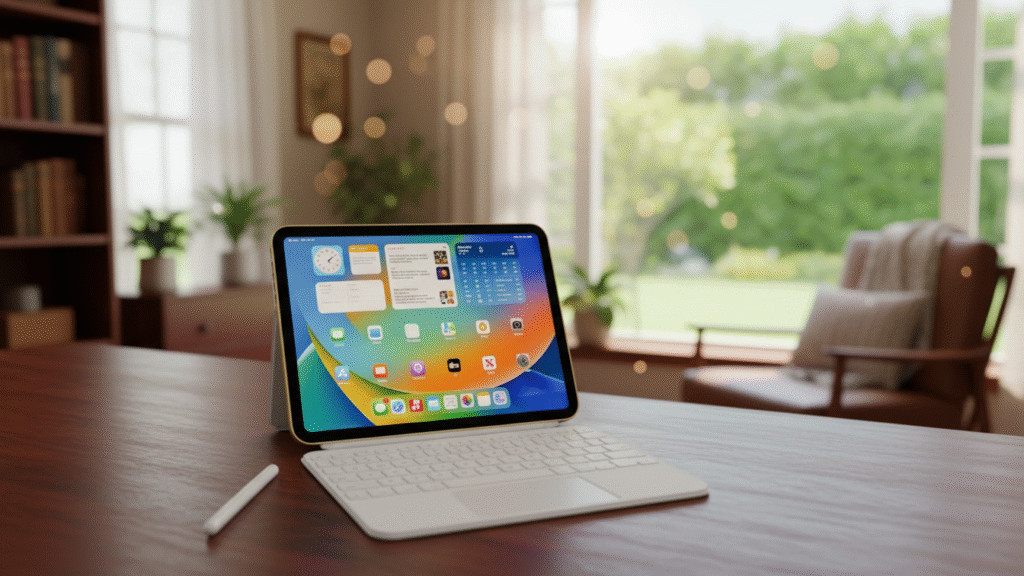
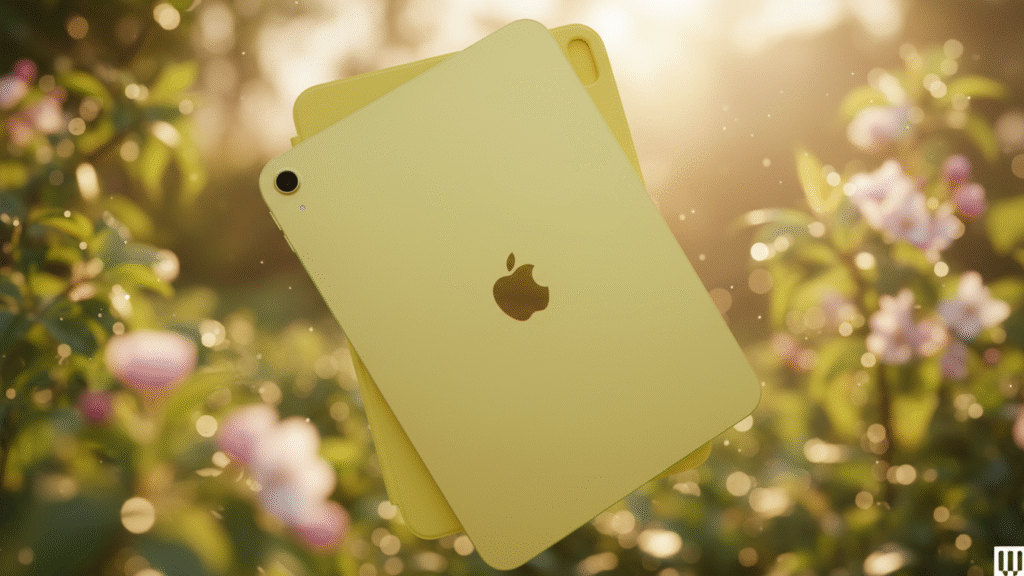
The 2025 base iPad marks Apple’s most significant entry-level tablet update in years, moving from the A14 to the A16 Bionic chip while maintaining its accessible price of $449 (or $599 for cellular). This is not a revolutionary redesign, but a strategic performance-focused upgrade that blurs the line between entry-level and premium. With near–iPad Air–level performance in the classic iPad body, it becomes the smartest choice for most tablet buyers.
The Core Upgrade: What A16 Bionic Really Means
Performance Leap: From 2020 to 2023 in One Jump
The shift from A14 (iPhone 12 era) to A16 (iPhone 14 Pro era) delivers around 40% CPU and 50% GPU improvement in synthetic benchmarks. Real-world impact:
Task | A14 iPad (2022) | A16 iPad (2025) | Improvement
App Launch | 1.8–2.5 seconds | 0.8–1.2 seconds | Around 2x faster
4K Video Export | 4 minutes | 2.5 minutes | 37% faster
Gaming (Genshin Impact) | Medium 45fps | High 60fps | Higher settings playable
Multitasking | 3–4 apps | 5–6 apps stable | Better memory handling
The Chip Strategy: Why This Matters Now
Apple’s decision highlights a clear strategy:
Future-proofing with 5+ years of iPadOS updates
AI readiness via a 16-core Neural Engine
Ecosystem push for Stage Manager and pro-level apps
Competitive pressure on mid-range Android tablets
What’s New (and What’s Not)
New for 2025
A16 Bionic chip (6-core CPU, 5-core GPU, 16-core Neural Engine)
Wi-Fi 6E support
Bluetooth 5.3
Updated colors: Space Gray, Silver, Pink, Blue
Still the Same
10.9-inch Liquid Retina display (2360×1640, 500 nits)
64GB base storage, 256GB option
12MP front camera with Center Stage, 12MP rear
USB-C port with USB 2.0 speeds
60Hz refresh rate
Apple Pencil (1st generation) support only
Pros & Cons: The Balanced Reality
Pros
Excellent performance-to-price ratio
Long software support through 2030 and beyond
Strong Apple ecosystem integration
Large library of tablet-optimized apps
Excellent video calling experience
10+ hours of real-world battery life
Wide accessory support
Cons
Aging design with thick bezels
64GB base storage feels restrictive
60Hz display feels dated
Awkward first-generation Pencil charging
USB-C limited to USB 2.0 speeds
Stereo speakers only in landscape
Performance Deep Dive: Who Actually Benefits
Perfect For
Students handling notes and research
Families with shared usage and parental controls
Casual creatives working with photos, music, and sketches
Business users for calls and documents
Entertainment-focused users
Performance Limits
Professional artists may feel constrained by 60Hz and Pencil limitations
Video editors get solid performance but slower exports than M-series iPads
Hardcore gamers miss 120Hz and sustained peak performance
Power users may want more RAM for Stage Manager
Competitive Landscape
vs. Previous Generation iPad (A14)
Upgrade only if you rely on heavy apps. New buyers should choose A16.
vs. iPad Air (M2)
Air offers laminated display, Pencil 2, and more headroom.
Base iPad delivers roughly 90% of the experience at a lower cost.
vs. Android Competition (Samsung Tab S9 FE)
Apple wins on performance, updates, and app quality.
Samsung wins on storage, included S Pen, and higher refresh rate.
Storage Dilemma: The 64GB Problem
Typical storage usage quickly eats into available space.
64GB works only with strong cloud reliance.
Students and professionals should seriously consider 256GB.
Accessory Ecosystem
Apple Pencil (1st gen) remains essential despite charging inconvenience
Magic Keyboard Folio turns it into a light laptop replacement
Third-party keyboards and cases offer better budget value
Long-Term Value Proposition
Software updates likely through 2030+
Security updates beyond 2032
Strong resale value compared to Android tablets
Who Should Buy This iPad
Buy it if
You are new to Apple’s ecosystem
You need reliable performance for daily tasks
You value long-term updates
You want premium performance on a strict budget
Consider alternatives if
You need a 120Hz display
You want Pencil 2 support
You require large storage without extra cost
You plan heavy laptop-style usage
You need faster external display or storage support
The Verdict: Apple’s Smartest Compromise
Rating: 4.5/5
The 2025 iPad with A16 is Apple at its most calculated and effective. By pairing a powerful chip with a familiar design, Apple has created one of the best-value tablets for real-world users.
The Bottom Line
It lacks headline features like 120Hz or Thunderbolt, but for everyday use it delivers nearly the full iPad Air experience at a significantly lower price. The A16 ensures long-term smoothness, making this a future-proof purchase for most people.
Apple has made its entry-level iPad so capable that it challenges the relevance of the iPad Air for average users. That balance benefits consumers while strengthening Apple’s ecosystem. Accessories and storage upgrades may be necessary, but the core device offers outstanding value.