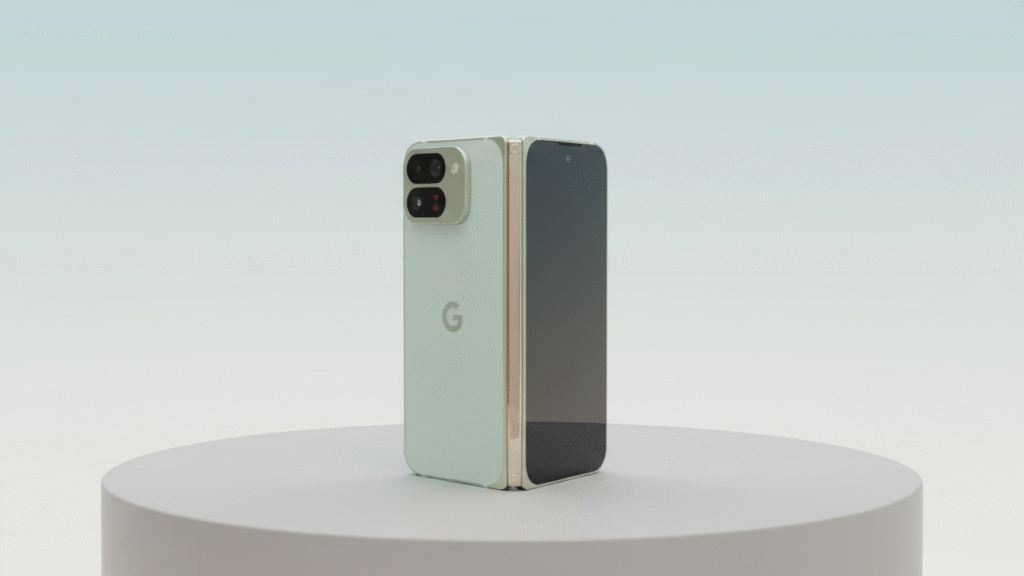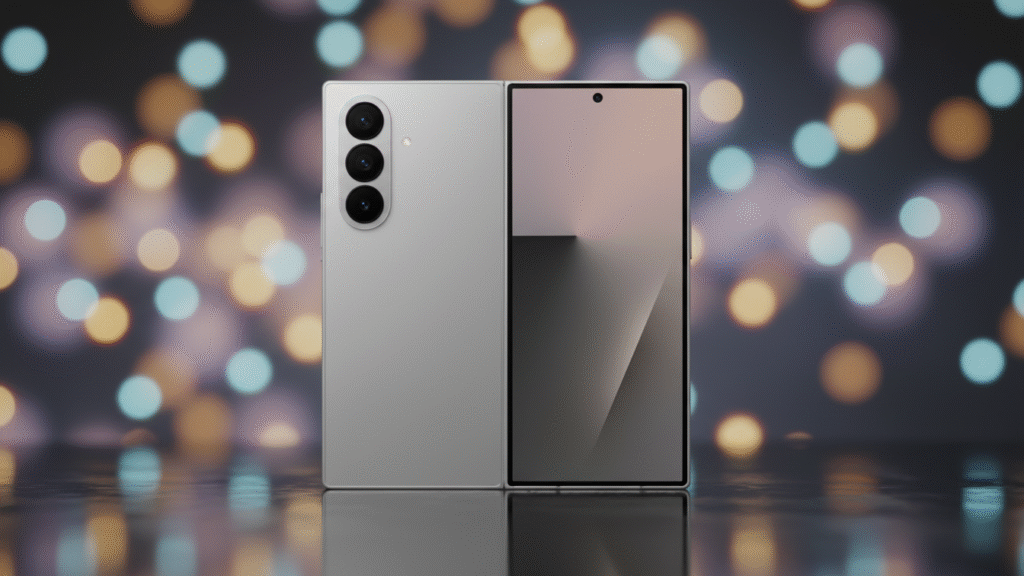
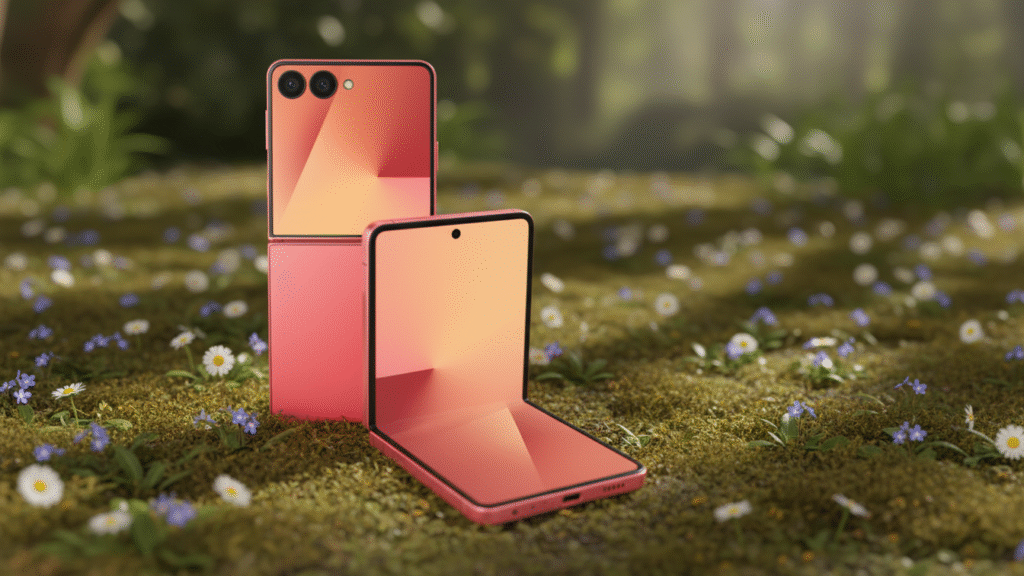
Samsung Galaxy Z Flip 7 review — bigger cover screen, improved battery life, and flagship speed make it the best Flip yet — but it still lacks the innovation spark to dominate foldables.
Foldable smartphones have come a long way from being novelty tech — today, they’re trying to balance practicality, portability, and performance. With the Samsung Galaxy Z Flip 7, Samsung attempts to refine what the Flip line stands for: compactness, style, and convenience. On paper, this looks like the most polished Flip generation yet — a larger outer display, a bigger battery, and a modern flagship chipset boost.
After spending more than a week using the Z Flip 7 as my daily driver, I’ve found it to be a notable upgrade over previous Flip models — but not quite the leap forward many hoped for. It’s a foldable that feels safer, more dependable, and more usable than ever before. Yet it still misses some of the magic, especially when compared with “standard” flagship phones or what the foldable segment could be. In short: Samsung improved the formula — but didn’t reinvent it.
In this deep dive review, I’ll cover everything from design and display to performance, battery, camera, software, and ultimately, whether the Flip 7 belongs on your radar.
Contents
- 1 Design & Build: Familiar Foldable, Minor Refinements
- 2 Outer Display: A Leap in Usability — But Underutilized
- 3 Inner Display: Premium Panel, But the Foldable Trade-Offs Remain
- 4 Performance & Software: Fast, Responsive — As Expected
- 5 Battery Life & Charging: Finally, Flip Feels Like a Full-Day Phone
- 6 Cameras: Reliable for Casual Use — Not a Flagship Shooter
- 7 Foldable Experience & Real-World Use: The Trade-Offs Revealed
- 8 Who the Flip 7 Is For — And Who Should Skip It
- 9 Final Thoughts: A Strong Flip, But Not a Flagship Killer
Design & Build: Familiar Foldable, Minor Refinements
The overall silhouette of the Z Flip 7 remains instantly recognizable: compact when folded; surprisingly pocketable; smooth hinge action; minimal footprint. However, Samsung made subtle improvements to the build. The new armor-aluminum frame feels sturdier and gives more confidence when opening and closing the flip. The hinge feels tighter, smoother, and more reliable than earlier Flip models, putting to rest some of the creakiness and wobble fans used to worry about.
What feels good:
- Compact size & pocketability: Even with a large internal screen, in folded form the phone slips into a jeans pocket easily — perfect for those who dislike bulky “phablets.”
- Premium materials: The matte finish on the back resists fingerprints better, and the overall build feels more durable than previous Flip phones.
- Hinge reliability: After dozens of folds/unfolds, the mechanism remains smooth; there’s no wobble or misalignment.
What still feels conservative:
- No bold new look: If you were expecting a striking redesign or a new foldable aesthetic, the Flip 7 plays it safe. The dual-tone back, hinge lines, and slim form are familiar to the point of predictable. It no longer feels “futuristic.”
- Crease persists: The inner display still has a visible crease when viewed close-up at certain angles — not terrible, but noticeable enough for those sensitive to screen uniformity.
- Build vs. fragility trade-off: Foldables inherently remain more delicate than slab phones; accidental drops while folded still worry me, especially for the hinge and rear glass panels.
Verdict: The Flip 7 remains a well-built and reliable flip phone. The refinements are welcome and make it feel far more mature than early foldables — but it still doesn’t feel like a radical new design, just a polished iteration.
Outer Display: A Leap in Usability — But Underutilized
One of the biggest updates in this generation is the larger external “cover” screen — roughly 4 inches — giving it real potential beyond just notifications. In use, I found that this new screen transforms some daily tasks:
- Quick replies to messages without opening the phone
- Checking calendar, weather, and widgets at a glance
- Previewing photos (useful when using the back camera for selfies)
- Controlling music, timers, and other small utilities
In many ways, this cover display finally starts to feel useful enough to compete with a regular smartphone lock screen — something previous Flip models struggled with.
However, in practice, the experience remains half-baked:
- Software limitations: Many apps don’t adapt well to the smaller outer screen, defaulting to tiny font windows or awkward UI scaling. Using certain apps directly from the cover screen still feels like forcing a full-sized smartphone into a tiny canvas.
- Gesture and input awkwardness: The narrower vertical space feels limiting — typing on the outer display with the on-screen keyboard is possible, but clunky. Scrolling through social feeds or navigating big apps is feasible but not fluid.
- Missed potential for multitasking: You can’t run two apps at once (outer and inner) — a true productivity foldable should allow more flexible multitasking.
Verdict: The larger cover screen is arguably the most practical update on the Flip 7. For quick tasks and lightweight use, it’s a game-changer. But until Samsung (or developers) fully optimize apps for this format, the experience remains semi-useful — improved convenience, but not a paradigm shift.
Inner Display: Premium Panel, But the Foldable Trade-Offs Remain
Inside, the Flip 7 sports a 6.7-inch Dynamic AMOLED panel with a 120Hz adaptive refresh rate. This is where Samsung continues to lead — the screen is sharp, bright, and rich in color. Watching videos, browsing social media, or reading articles feels almost identical to using a regular flagship phone.
What stands out:
- Vibrant, smooth display: Colors are punchy, black levels deep, and even under bright sunlight the display remains readable. Animations and scrolling are fluid thanks to the adaptive refresh.
- Reduced crease visibility: Samsung’s panel refinement helps — the crease is less obtrusive than older Flip models, and for many tasks feels negligible.
What’s still a downside (in 2025):
- Foldable compromises remain: Despite improvement, the screen still can’t match the flat, rigid displays of slab smartphones in terms of robustness or long-term wear. I worry about potential long-term flex fatigue.
- No top-tier screen size if you like big displays: While 6.7 inches is fine, for power users or media lovers, it still feels smaller than large “phablet” devices — the Flip remains a compact compromise.
Verdict: For everyday use, the inner screen delivers. It doesn’t feel like a sacrifice compared to regular phones — but some trade-offs inherent to foldables remain visible, especially for demanding users who want maximal durability or screen size.
Performance & Software: Fast, Responsive — As Expected
Under the hood, the Flip 7 upgrades to a modern flagship chipset (e.g., Snapdragon 8 Gen 4 in many regions), which translates into snappy performance, smooth multitasking, and future-proof speed. After a week of heavy usage — social media, web browsing, video streaming, navigation, a bit of light photo editing — the phone remained consistent: no lags, no overheating, and fast app launches.
Highlights:
- Immediate responsiveness: Tasks like switching apps, loading heavy web pages, or playing resource-demanding games (on medium settings) felt almost instant.
- Good thermal performance: Even with prolonged use, the phone didn’t get uncomfortably warm — perhaps helped by the efficient foldable design’s venting elements.
- One UI 7 (or latest Samsung interface): Smooth, polished and modern. The UI feels optimized for both folded and unfolded modes, and switching between tasks is seamless.
But limitations to note:
- Still no desktop-level power: As with all flip phones, there’s no dedicated GPU or workstation-level performance — heavy video editing, 3D rendering, or demanding creative workloads remain off-limits.
- Foldable CPU trade-offs: Compared to slab flagships, sustained heavy workloads will knock down performance over time (as with most foldables), because of thermal and design constraints.
Verdict: For a foldable compact phone, the Flip 7 performs exactly how you’d expect a modern flagship to perform — fluidly and reliably. It’s suitable for everyday users, productivity tasks, and even casual gaming — but not for power users.
Battery Life & Charging: Finally, Flip Feels Like a Full-Day Phone
Historically, one of the biggest drawbacks of the Flip series was battery life. With the Flip 7, Samsung appears to have listened.
- 4,000mAh battery (largest in Flip history)
- Moderate to heavy daily usage consistently delivers full-day endurance, often ending with 15–25% battery left by bedtime
- With moderate/light use, the device comfortably reaches well into the next day
- Fast charging helps top up quickly — helpful when you’re out all day
For the first time in years, the Flip doesn’t feel like you might run out of battery in the afternoon if you start streaming or traveling.
Still, trade-offs remain:
- Heavy gaming or extended video streaming will drain battery faster — close to what you’d expect on standard phones.
- Compared to large-screen phablets with 5,000 mAh+ batteries, endurance is good but not exceptional; media-heavy usage will reduce the advantage.
Verdict: The Flip 7 finally addresses the long-time battery gripe. For most users, battery life is no longer the Achilles’ heel. It’s one of the most complete flip phones yet in terms of practical daily usability.
Cameras: Reliable for Casual Use — Not a Flagship Shooter
The camera setup keeps things straightforward and functional:
- 50 MP main sensor
- 12 MP ultrawide lens
- Standard selfie camera (for folded mode)
What works well:
- Daylight photos: Crisp, detailed, with vibrant colors and good dynamic range — good enough for social media, quick captures, and casual photography.
- Selfies with the main camera: Using the outer screen as a viewfinder while folded delivers surprisingly good selfie shots, often better than conventional front-camera touches.
- Ultrawide shots: Acceptable for group photos, landscapes, and general snapshots.
Where it falls short:
- Low-light performance is shaky: Noise creeps in, and detail drops — hardly what you’d expect from a top-tier Samsung flagship.
- Zoom limitations: There’s no dedicated telephoto lens; digital zoom causes noticeable clarity loss.
- Not ideal for serious photography or content creation: The lens combo is fine for everyday photos — but not flexible enough for power users or creators who need versatility or depth.
Verdict: The Flip 7’s camera system remains solid for everyday use and casual photography. For people who prioritize portability and convenience over photography, it strikes a reasonable balance. But for those who treat their phone as a creative tool — capturing low-light portraits, detailed landscapes, or professional-level content — it’s best to look elsewhere.
Foldable Experience & Real-World Use: The Trade-Offs Revealed
Using a foldable always involves trade-offs — and the Flip 7 shows exactly which ones you accept for compactness.
Advantages:
- Compactness & portability: When folded, the phone is tiny — perfect for pockets, small bags, or quick errands.
- Flexibility for casual tasks: The outer screen and foldable form factor make short interactions (e.g., messages, calls, quick snaps) more convenient without fully “unfolding”.
- Novelty & style: There’s still a certain delight in the fold/unfold action — a mix of nostalgia and modernity.
Limitations (compromises you accept):
- Durability concerns remain: Foldables are inherently more fragile than slab phones; long-term wear — especially on the display hinge — remains a question mark.
- Reduced screen size compared to large phones: For media consumption or gaming, you’re still working on a smaller canvas.
- Not ideal for heavy workloads or creative tasks: Limited by hardware and foldable design.
- Accessories & screen protection limitations: Finding robust screen protectors, cases, or external attachments remains harder compared to traditional phones.
Verdict: The Flip 7 is a great example of what a foldable could be — compact, pocketable, convenient — but it still feels like a compromise. It’s a trade-off that suits some users very well (those prioritizing portability and convenience), but others may find the limitations too restricting.
Who the Flip 7 Is For — And Who Should Skip It
✅ You Should Consider Flip 7 If You:
- Value portability and compactness — you dislike large “phablets.”
- Do lots of light, quick tasks: messaging, calls, social media, web browsing — especially on the go.
- Want a stylish, unique device that stands out from slab smartphones.
- Prefer flexible usage: sometimes a phone, sometimes pocket-size gadget.
- Need a convenient secondary screen for notifications and quick actions.
- Accept that you won’t get DSLR-level photography or workstation-level performance — you just want a useful, pocketable phone.
❌ You Should Skip Flip 7 If You:
- Require top-tier camera performance, especially in low light or for creative content.
- Do heavy tasks: video editing, 3D work, or serious gaming.
- Prefer a large-screen media experience (e.g. binge streaming, tablet-like usage).
- Prioritize durability and longevity — you frequently drop phones, or want maximum ruggedness.
- Need flagship-level battery endurance under high workloads.
- Want a phone that will feel “future-proof” in terms of repairability, accessories, and support.
Final Thoughts: A Strong Flip, But Not a Flagship Killer
The Samsung Galaxy Z Flip 7 is easily the most refined and usable Flip phone Samsung has delivered so far. It addresses the Flip series’ two biggest historical weaknesses — battery life and cover-screen usefulness — and delivers them in a polished, pocket-ready package.
For many users, especially those prioritizing portability, casual use, or style over raw power, this will be the most satisfying foldable purchase yet. It’s convenient, capable, and feels like a mature device rather than a proof-of-concept.
But for those chasing the cutting edge — the absolute best cameras, the longest battery life under heavy workloads, or a phone that can replace a tablet or laptop — Flip 7 remains a compromise. The foldable form factor alone brings limitations that even the best engineering can’t fully erase.
In the end, the Z Flip 7 is a compelling, practical foldable — just not a “flagship killer.” It’s a phone for those who appreciate compact convenience and flexibility over maximal power and versatility.
If you’re curious about foldables and value portability over features, Flip 7 is a worthy pick. If you want a “do-it-all” phone, a standard flagship slab might still offer more value for your money.